


Description
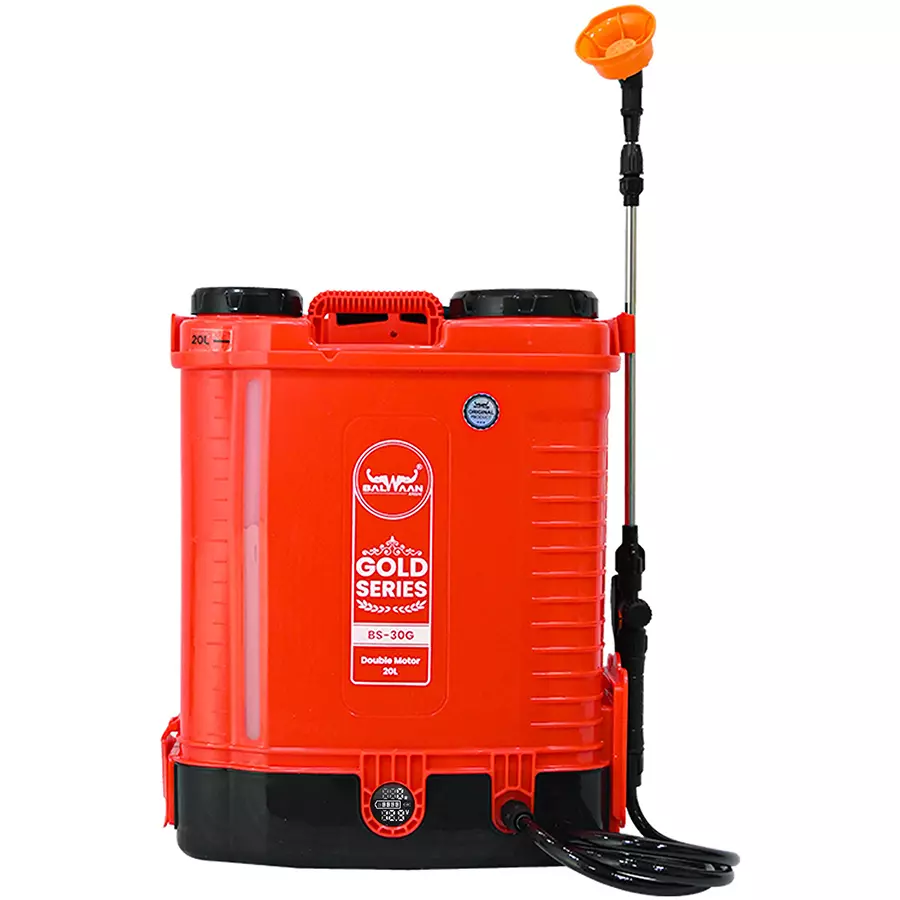
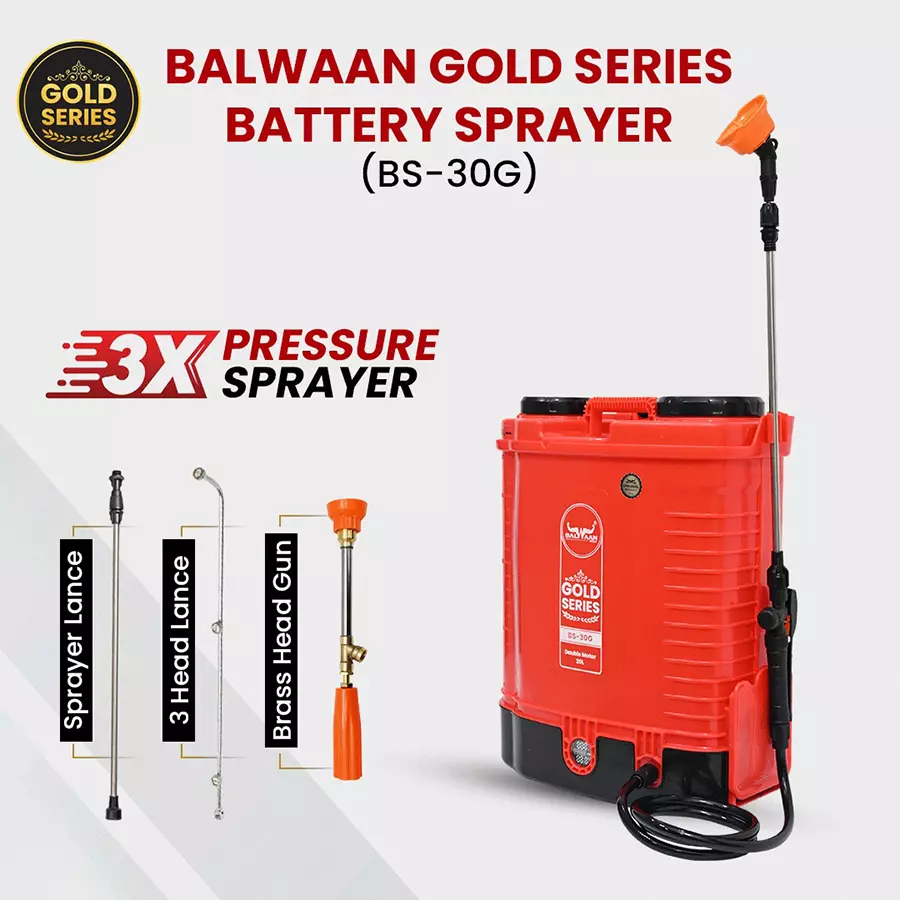
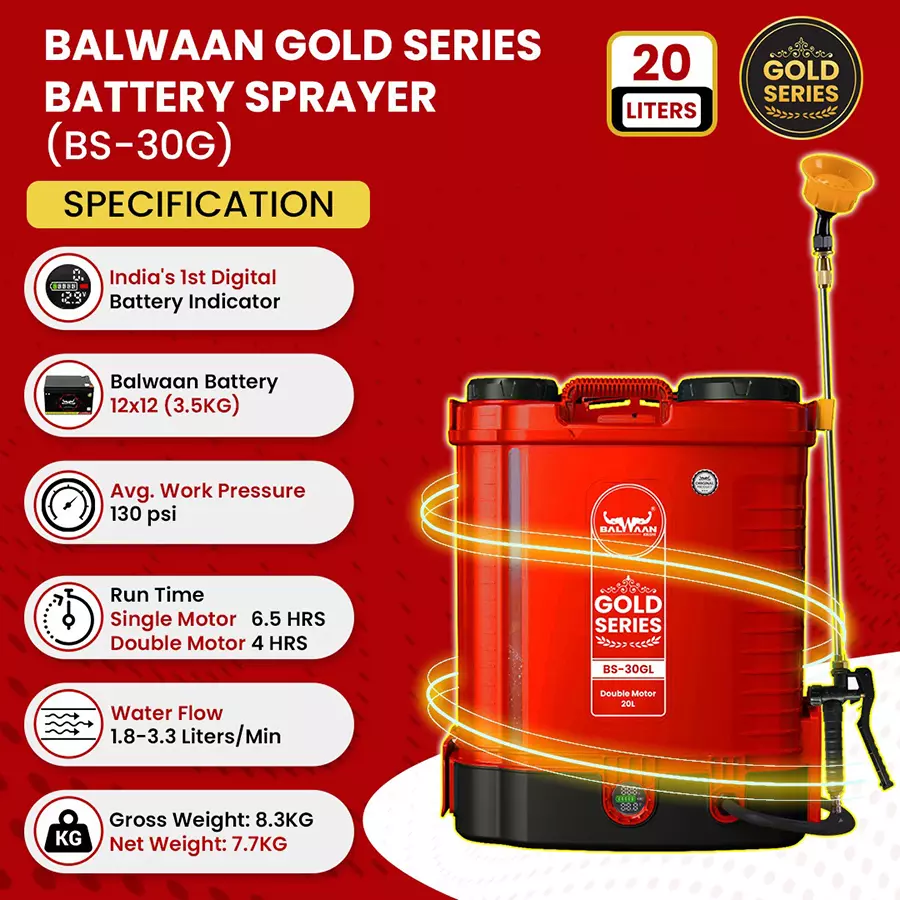
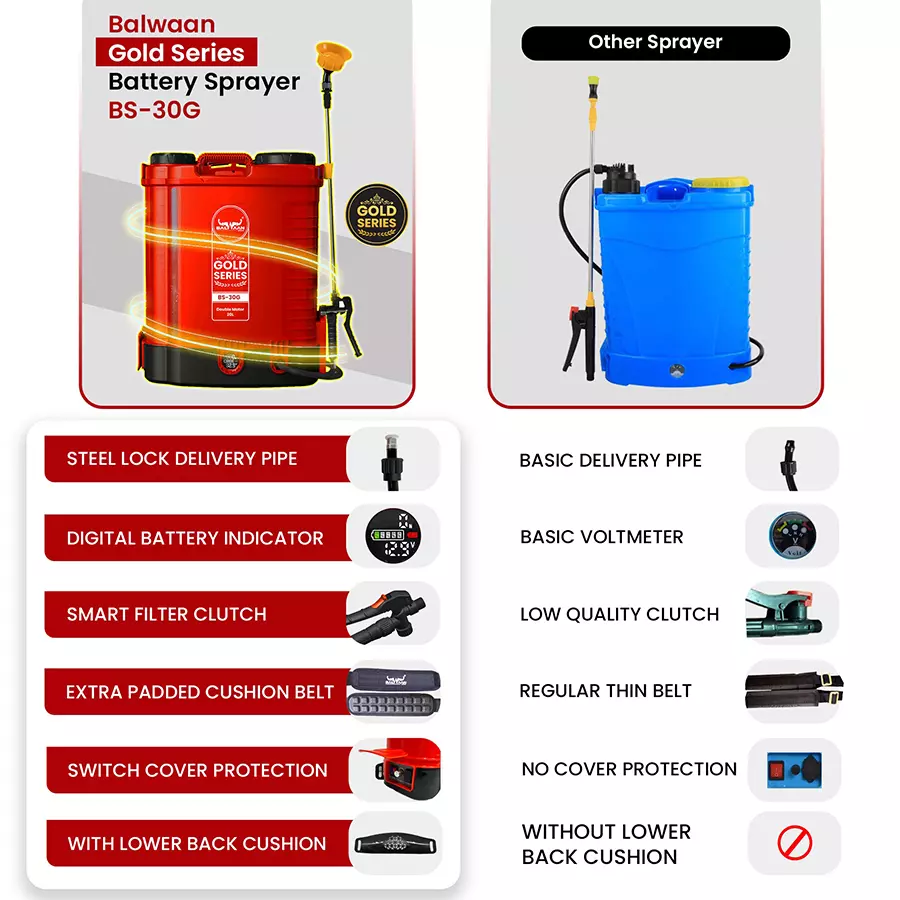
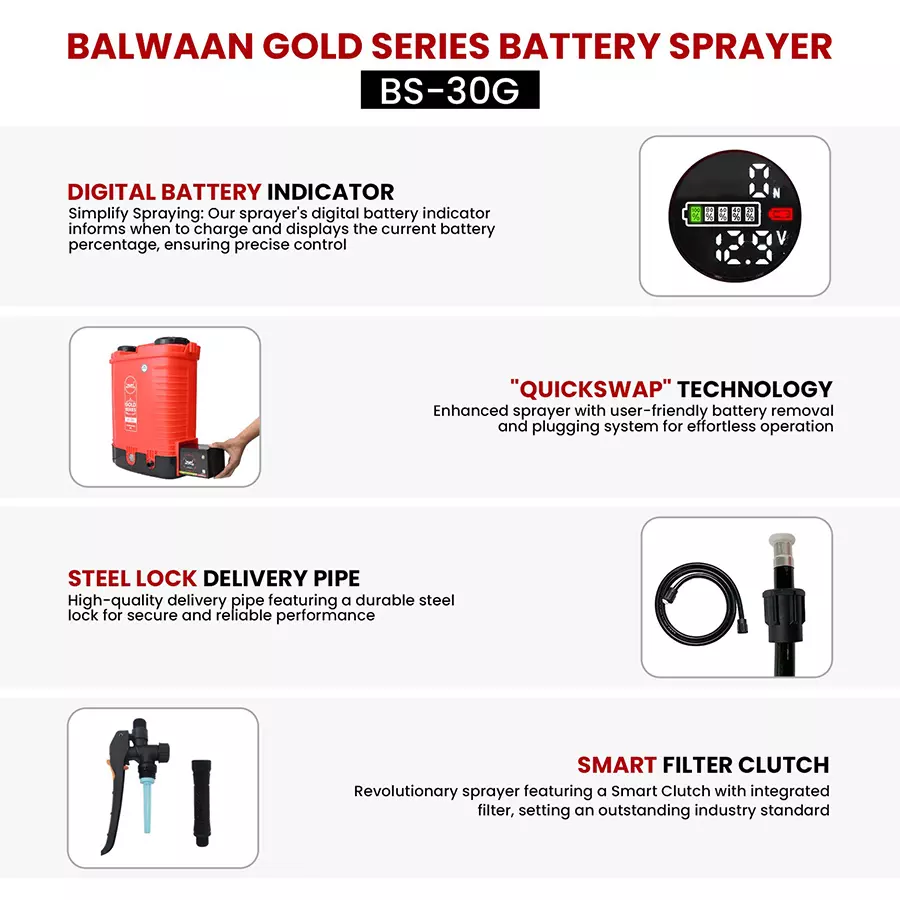
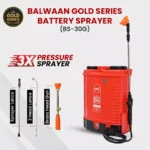
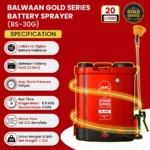
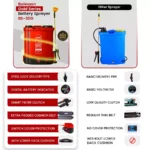
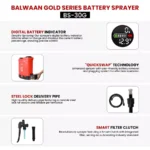
A Balwaan Gold Series 20 L Double Motor Battery Sprayer, BS-30G is a portable, motorized spraying device powered by rechargeable batteries. It is commonly used in agriculture, gardening, pest control, and sanitation to apply pesticides, herbicides, fertilizers, disinfectants, and other liquid solutions to crops, plants, lawns, and surfaces. Battery sprayers offer the advantage of mobility, convenience, and ease of use compared to traditional hand-pumped or manual sprayers. Here are the key features and components of a typical battery sprayer: Tank: The tank is the reservoir that holds the liquid solution to be sprayed.
Battery sprayers come in various tank capacities, ranging from small handheld units with capacities of a few liters to larger backpack or trolley-mounted units with capacities of several gallons. Tanks are typically made of durable materials such as polyethylene or stainless steel and may include measurement markings for accurate mixing of solutions. Battery and Motor: The battery and motor assembly provide the power for the sprayer’s operation. Battery sprayers are equipped with rechargeable lithium-ion or lead-acid batteries that power an electric motor. The motor drives a diaphragm pump or centrifugal pump to pressurize the liquid solution and propel it through the spray nozzle.
Pump Assembly: The pump assembly is responsible for pressurizing the liquid solution and delivering it to the spray nozzle. Battery sprayers may utilize different types of pumps, including diaphragm pumps, piston pumps, or centrifugal pumps, depending on the model and application. The pump assembly may be housed within the tank or mounted externally on the sprayer. Spray Nozzle: The spray nozzle is the outlet through which the liquid solution is dispensed in the form of a fine mist, spray, or jet. Battery sprayers may be equipped with various types of nozzles, such as adjustable cone nozzles, fan nozzles, or misting nozzles, to achieve different spray patterns and coverage areas.
Some sprayers may include multiple interchangeable nozzles for versatility. Pressure Control: Many battery sprayers feature pressure control mechanisms that allow the operator to adjust the spraying pressure according to the specific requirements of the application. Pressure control may be achieved through manual adjustment of a pressure regulator or by setting predefined pressure levels using electronic controls